



Beyond the Generalist Path
The EPSO AD5 generalist competition attracts the most attention — and the most candidates. But the EU institutions recruit many of their staff through specialist competitions that target specific professional fields. If you have deep expertise in a particular domain, these competitions may offer you a significantly more favourable ratio of candidates to places.
What Makes Specialist Competitions Different
Specialist competitions differ from generalist ones in three fundamental ways:
1. Entry requirements are stricter. Beyond a university degree, specialist competitions typically require a specific field of study (law, economics, computer science, etc.) and often several years of relevant professional experience. The exact requirements are defined in each Notice of Competition.
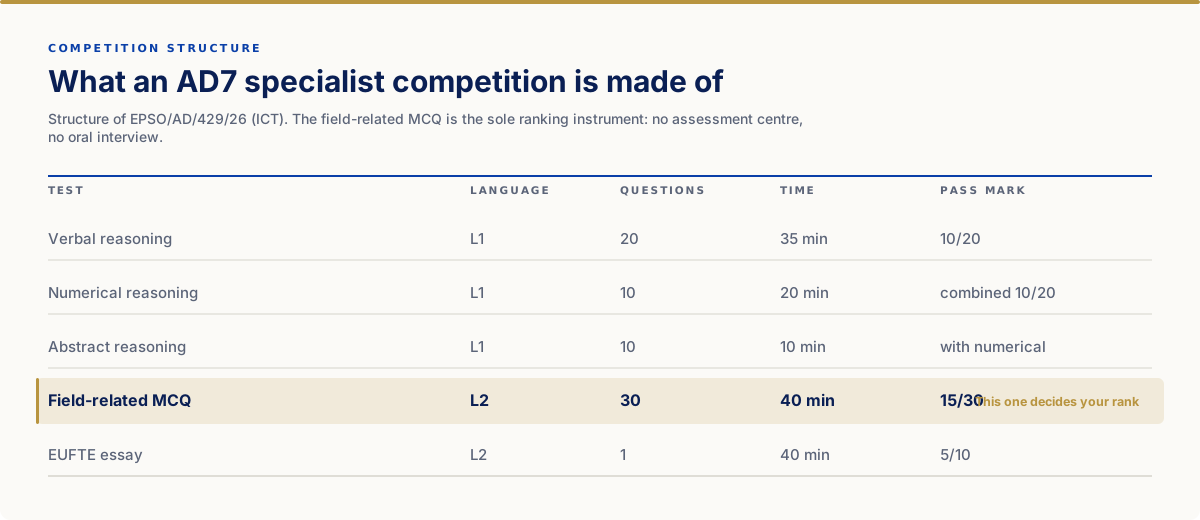
2. The test includes domain-specific questions. In addition to the standard reasoning tests, specialist competitions include Field-Related Multiple Choice Questions (FRMCQ) — questions that test your knowledge of EU legislation, policies, and frameworks relevant to your field.
3. The candidate pool is smaller but more focused. While an AD5 generalist competition might attract 174,727 applicants, a specialist competition in audit or statistics might attract a few hundred to a few thousand. The competition is narrower but deeper — every candidate has relevant expertise.
The FRMCQ Component
Field-Related MCQs are what make specialist competitions unique. These are not general knowledge questions — they test specific, detailed knowledge of EU regulatory frameworks in your field.
For Law specialists: Questions cover EU treaty provisions, the Court of Justice case law, legislative procedures, and specific regulations relevant to the field.
For IT specialists: Questions draw from the AI Act, GDPR, NIS2 Directive, Digital Services Act, Digital Markets Act, Cybersecurity Act, and the EU's digital strategy frameworks.
For Economics/Finance specialists: Questions address EU economic governance, the European Semester, financial regulations, and the ECB framework.
For Audit specialists: Questions cover the European Court of Auditors mandate, financial regulation, internal control standards, and EU budget discharge procedures.
The common thread: FRMCQ questions are always anchored in official EU legislation and institutional frameworks. They are not opinion-based. They test whether you know what the regulation actually says.
How to Prepare for FRMCQ
1. Start with the source legislation. Read the actual regulations, directives, and institutional rules relevant to your field. Summaries are useful for understanding, but the questions test the precise language and provisions of the official texts.
2. Focus on structure, not memorisation. Know which regulation covers what, which institution has which competence, and how procedures work. The questions test understanding of the framework, not the ability to recite article numbers.
3. Stay current. EU legislation evolves. New regulations enter into force, existing ones are amended. Your preparation must reflect the current legal framework, not a textbook from three years ago.
4. Practice with field-specific questions. Generic EPSO practice questions will not prepare you for FRMCQ. You need questions that test the specific regulatory knowledge of your field.
The Strategic Advantage of Specialist Competitions
For candidates with the right background, specialist competitions offer a significant strategic advantage:
- Smaller candidate pools mean better odds, even though the questions are harder.
- Your professional experience becomes an asset. Years spent working with EU regulations in your field directly translates to FRMCQ performance.
- AD7 entry level means a higher starting salary and grade than AD5.
- More targeted recruitment means EU institutions actively want your specific skills — which translates into faster recruitment after the reserve list.
The key insight is this: if you have 3-5 years of professional experience in a field where EPSO runs specialist competitions, you may be significantly better served by a specialist path than by competing against 174,727 candidates in a generalist AD5.
This competition is one of several specialist tracks opening in 2026 — the complete guide to EPSO specialist competitions compares places, deadlines and eligibility across all of them.
Get the free EPSO AD reasoning mock test
A realistic practice PDF — verbal, numerical and abstract reasoning. Enter your email and we send it right away.
Free. No spam. Unsubscribe anytime.